
I’m Alexei Sawyer, a sculptural woodturner, influenced by Wabi-sabi, working with sustainably sourced wood. This page supports my DYCP application: it shows my current technical foundation, and the carving and natural-finish experimentation I’m proposing to develop next.
Current Practice
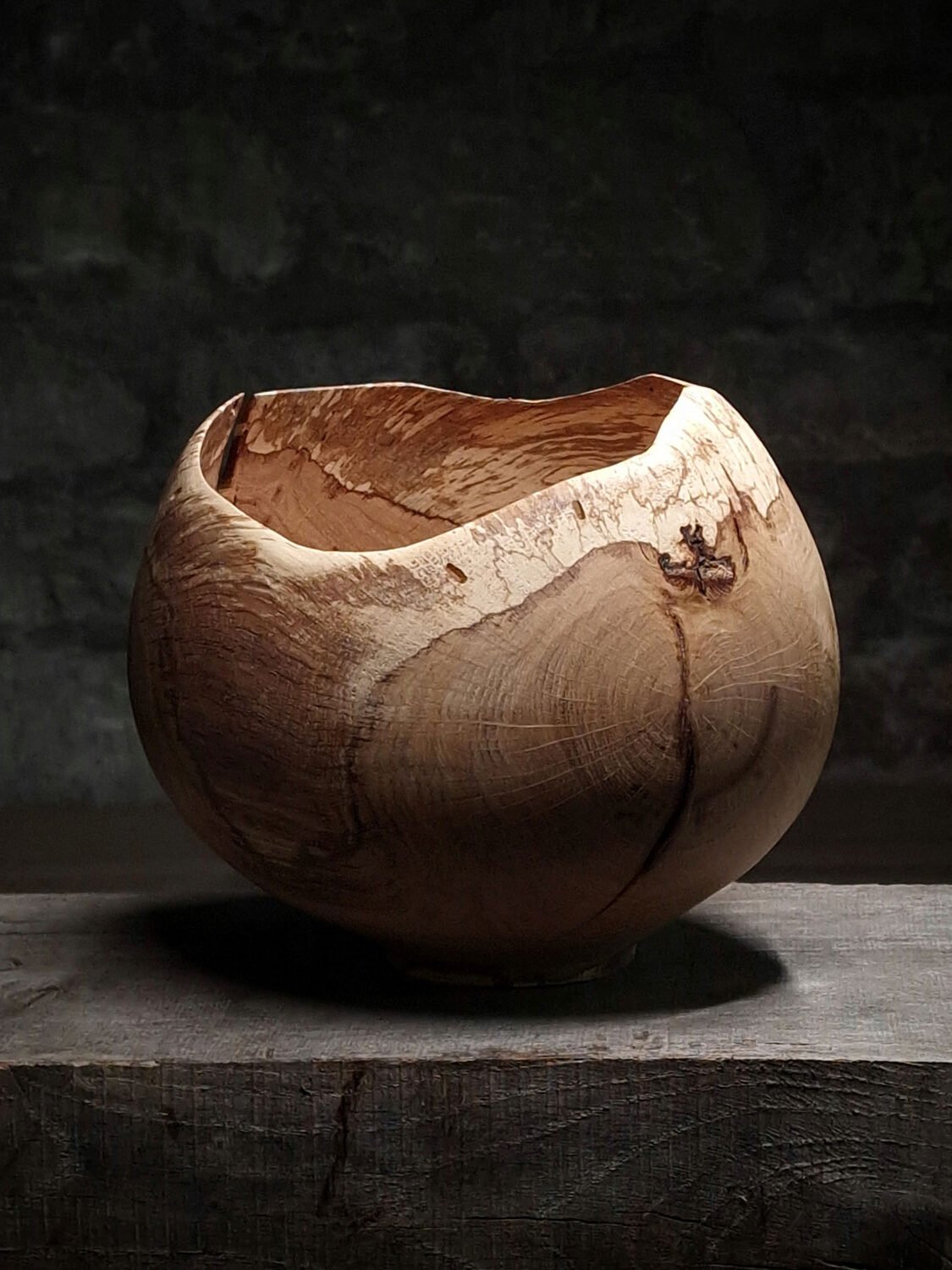
Green Oak
Turned green and left to move as it dried – splits and warping embraced, not corrected. Finished in natural Auro oil.
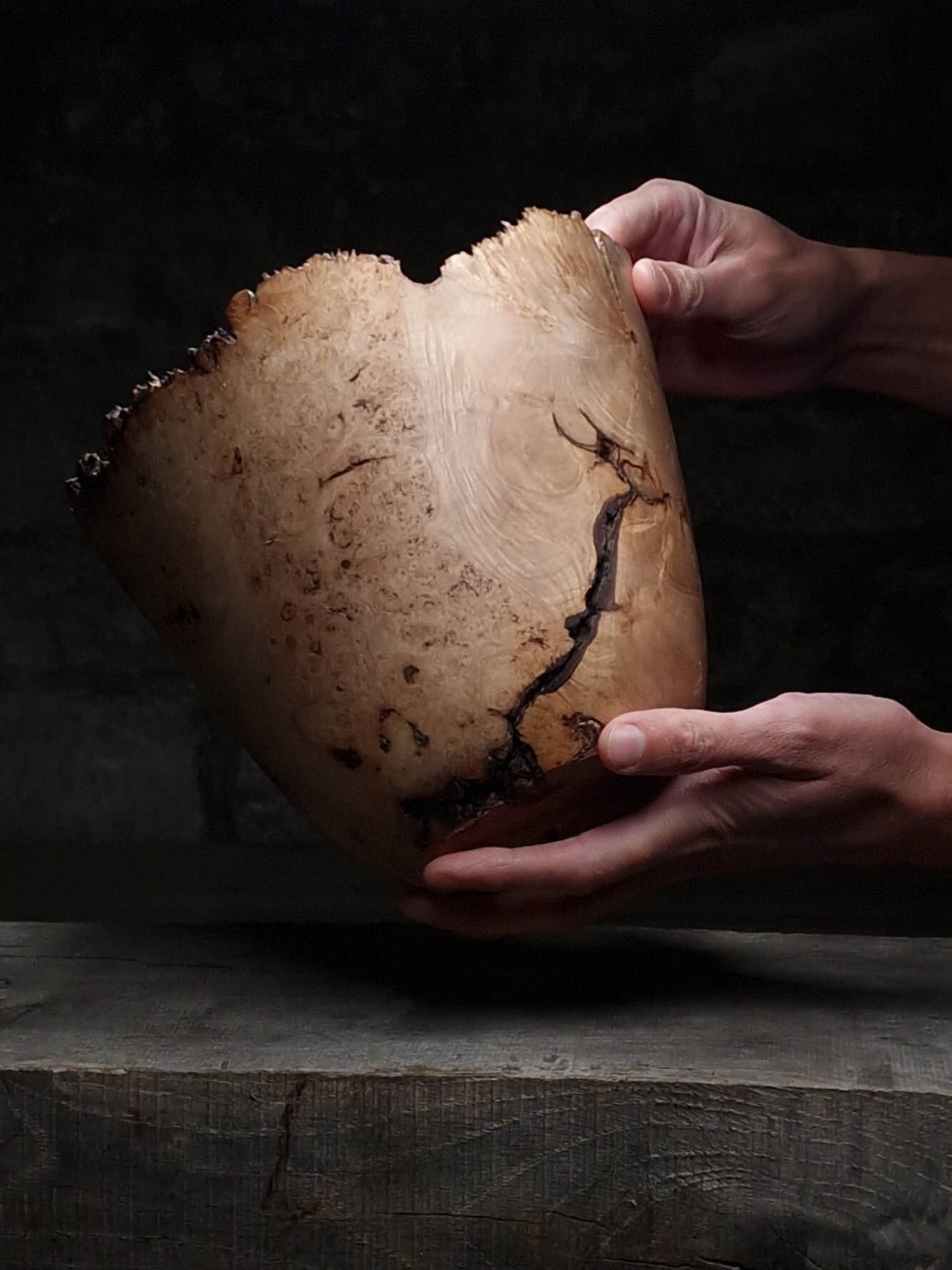
Apple Wood
From an apple tree at the end of its life. Minimal intervention; form dictated by the timber’s own grain and figuring.
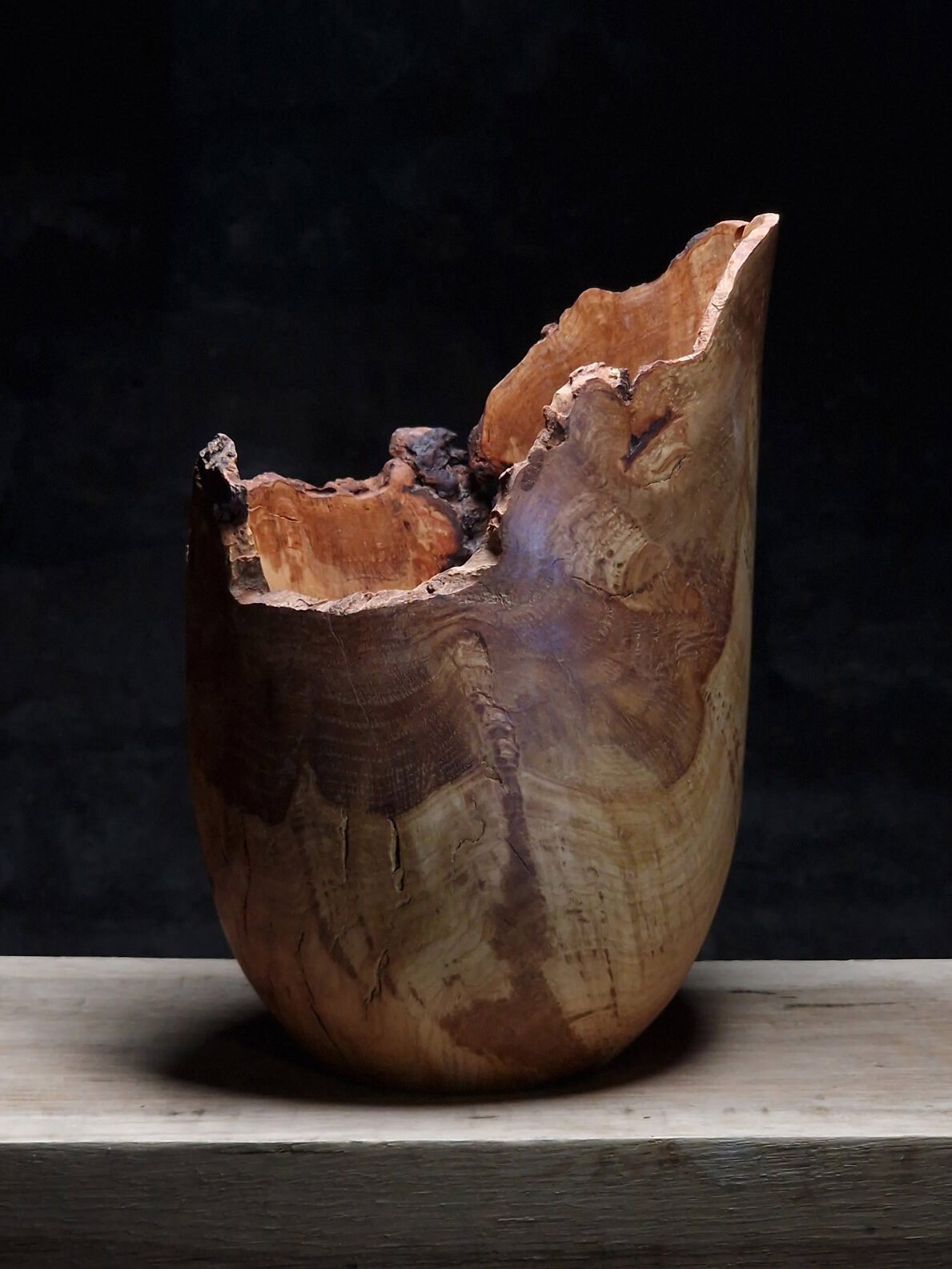
Oak Burr
One of three pieces from a single burr sourced at Westonbirt. Live edge meets a natural void – sculpture as much about absence as form.
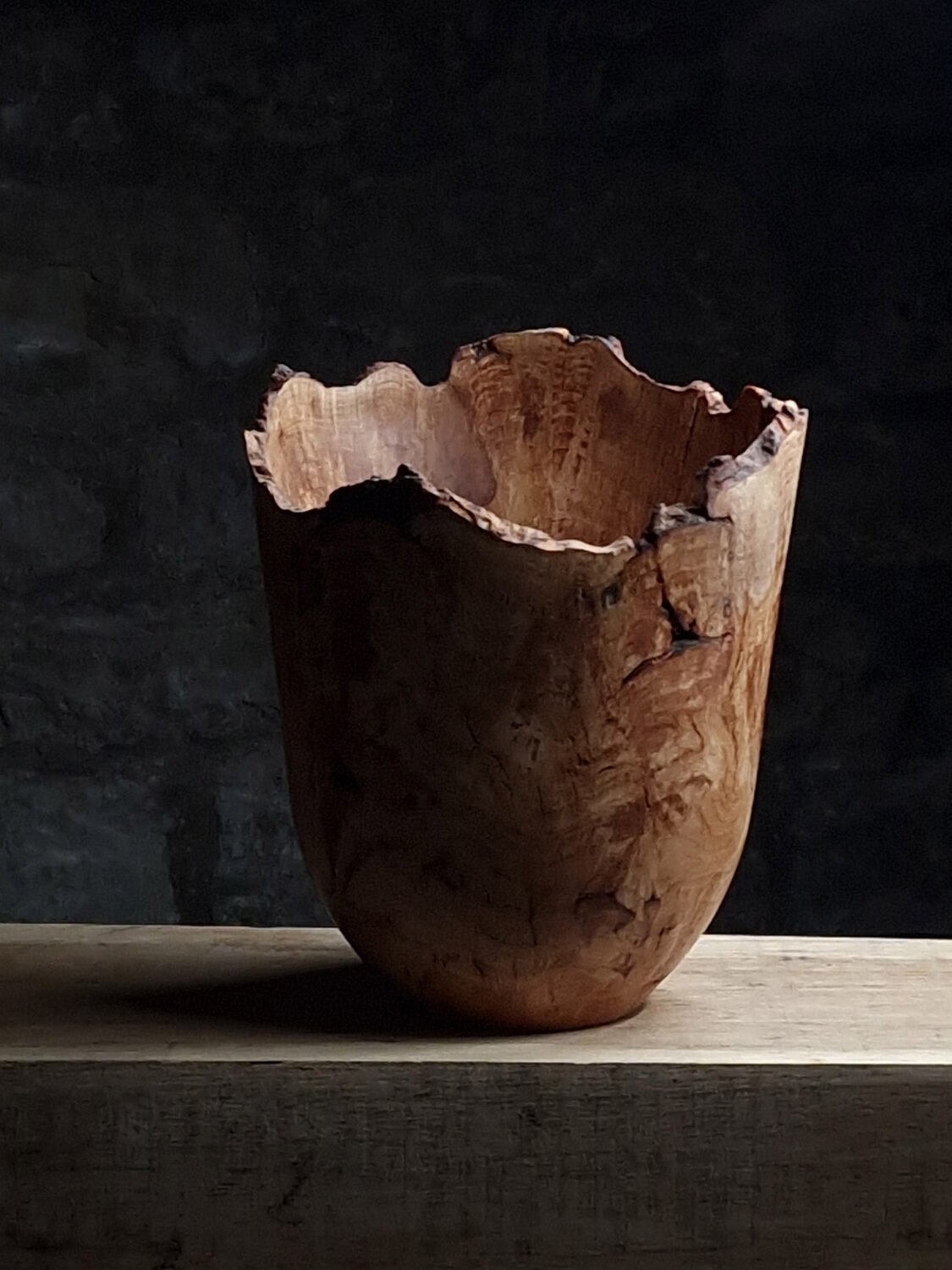
Oak Burr II
The largest of the set. Dense, swirling grain across a substantial, unhurried silhouette.
Process
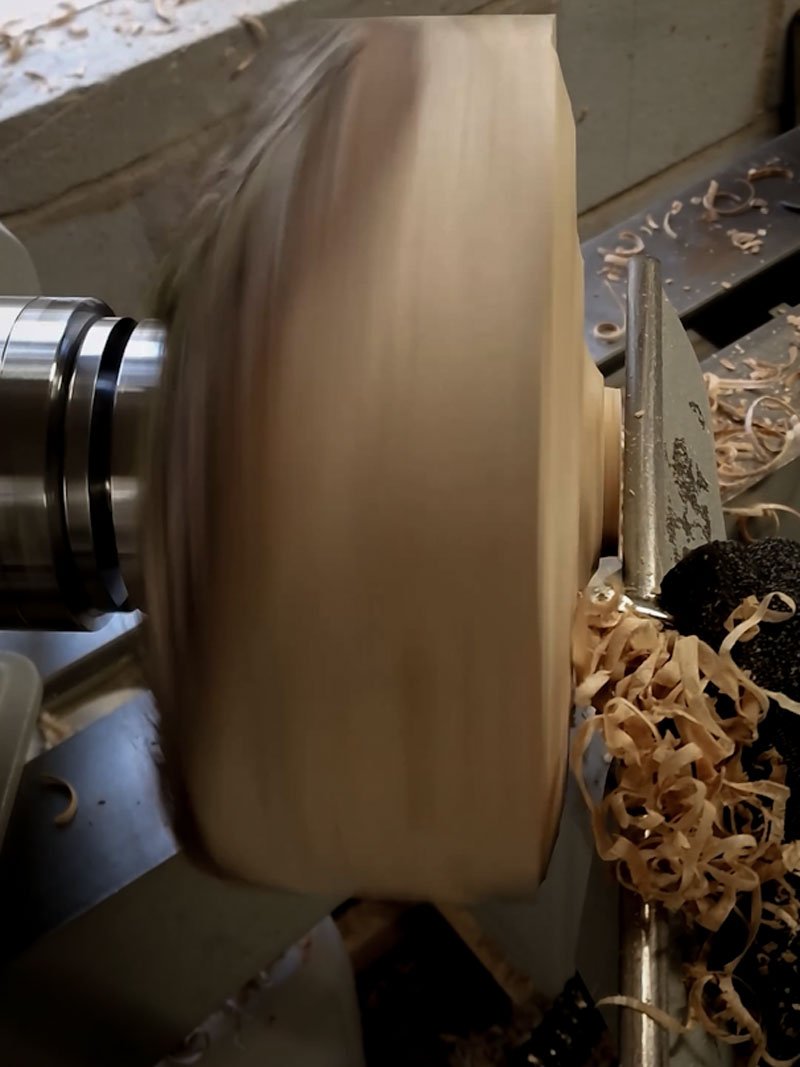
On the lathe
Roughing out an Oak blank – early stage of the turning process.
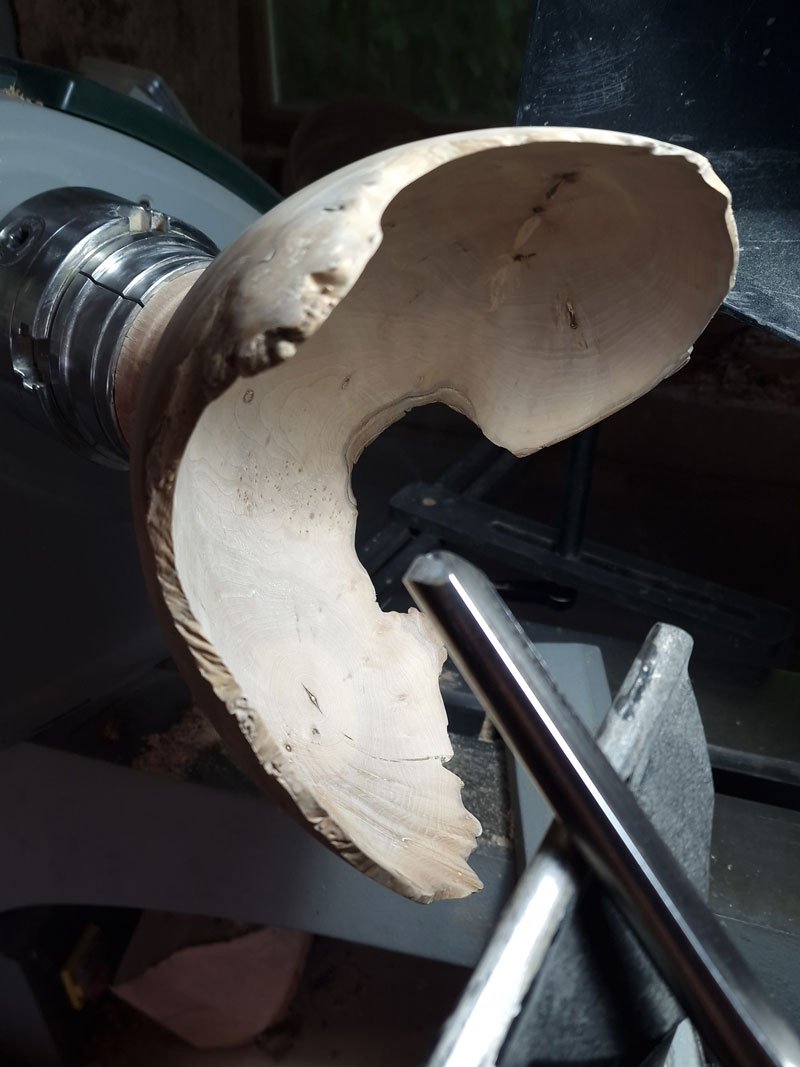
Finishing the Form
Wall thickness reduced to 4-5mm. Close to the point where turning stops and finishes touches are made.
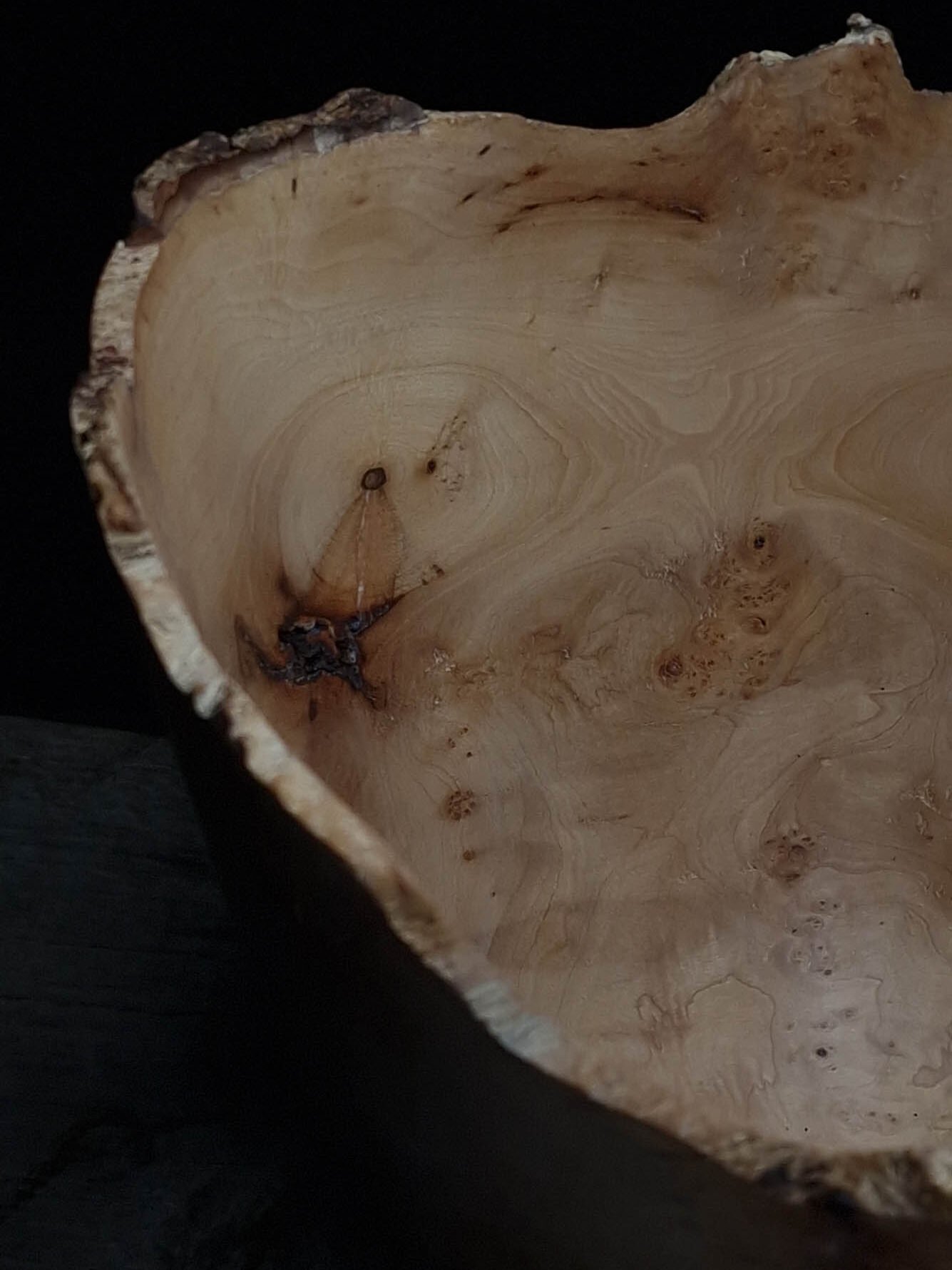
Surface detail
Live-edge transition, untouched bark retained as part of the final form.
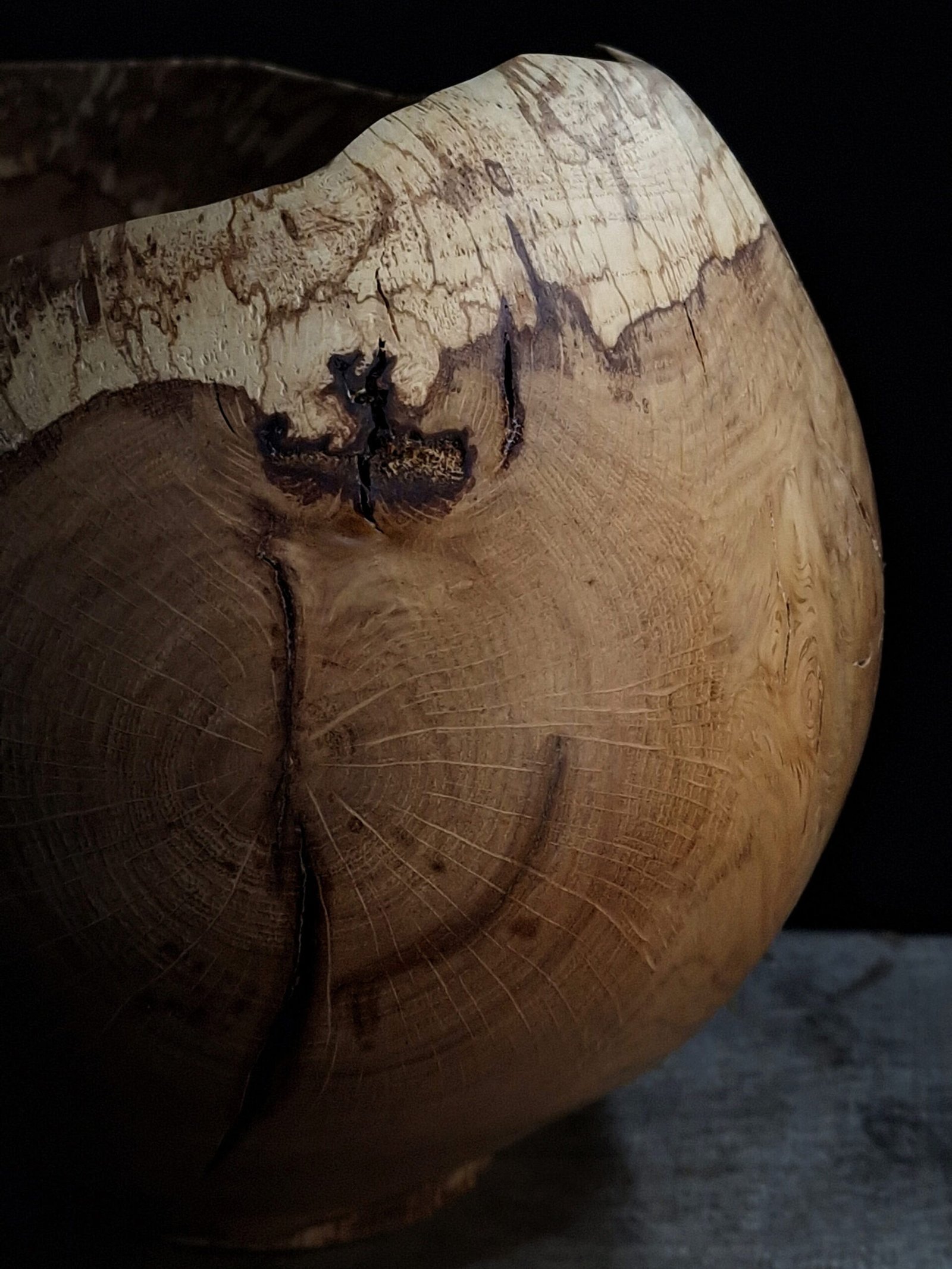
Grain detail
Spalting and figuring revealed only once cutting begins – never visible from the outside of the log.
Where I Want to Go
These concept sketches sit beyond my current skill set. I can turn complex sculptural forms with confidence – but combining turning with hand carving, to create the ideas shown here, requires training and experimentation I haven’t yet had the time or resources to undertake. This is the gap this funding would close.
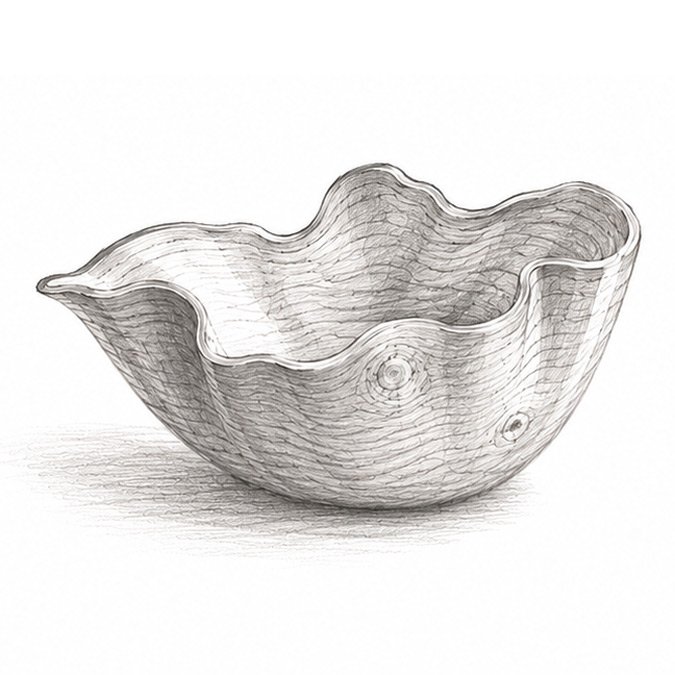
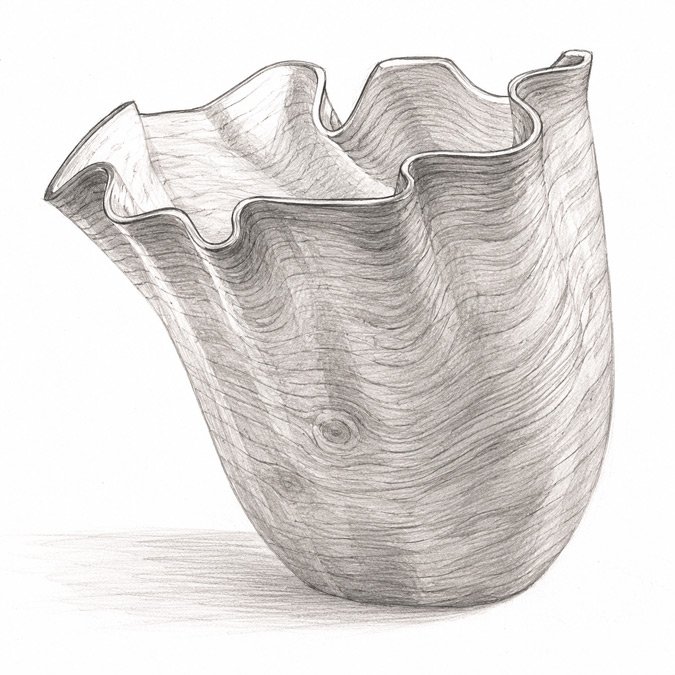
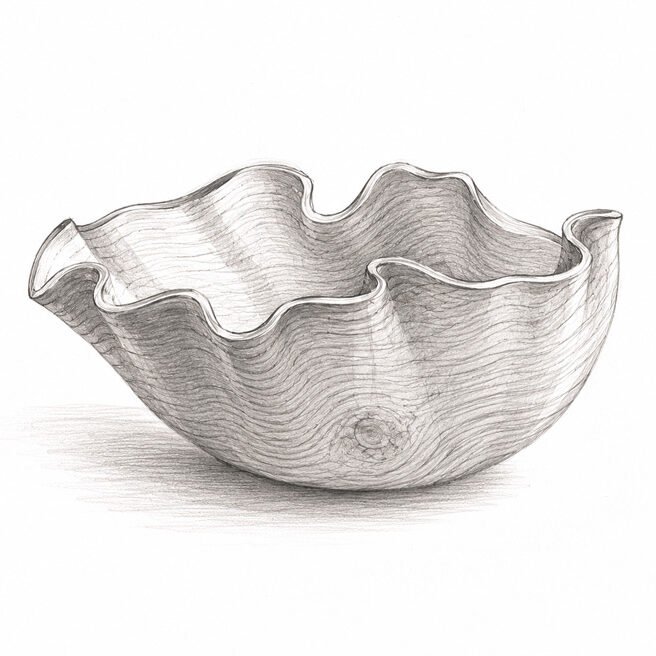
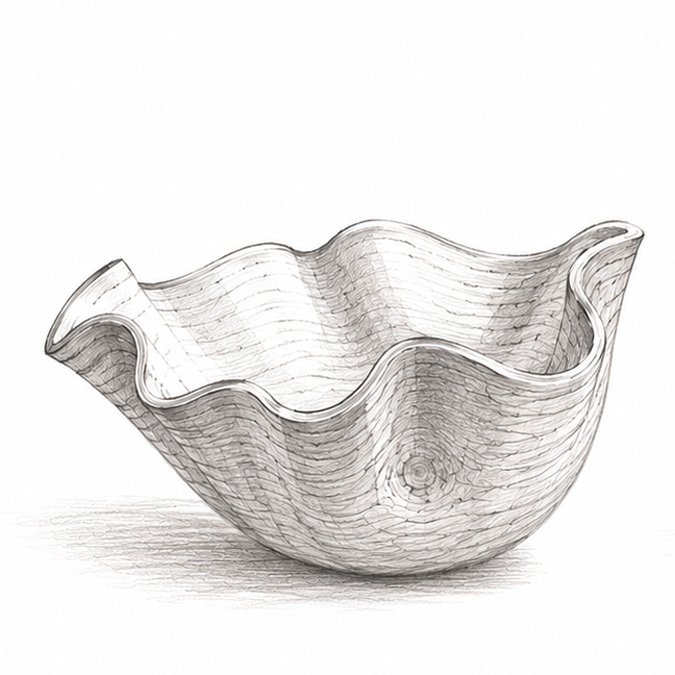
Finishes Experimentation
All current work is finished with natural Auro oil. The next stage of development is researching natural plant-based and traditional alternatives — iron vinegar, oak gall ink, botanical dyes – to expand my finish vocabulary beyond what’s commercially available, and reduce reliance on petrochemical and animal-derived products used widely across the trade. Specifically, I want to replicate effects associated with techniques like gas-burning (Shou Sugi Ban) and milk paint – but using alternative, non-toxic methods, free from petrochemicals and animal-derived ingredients.
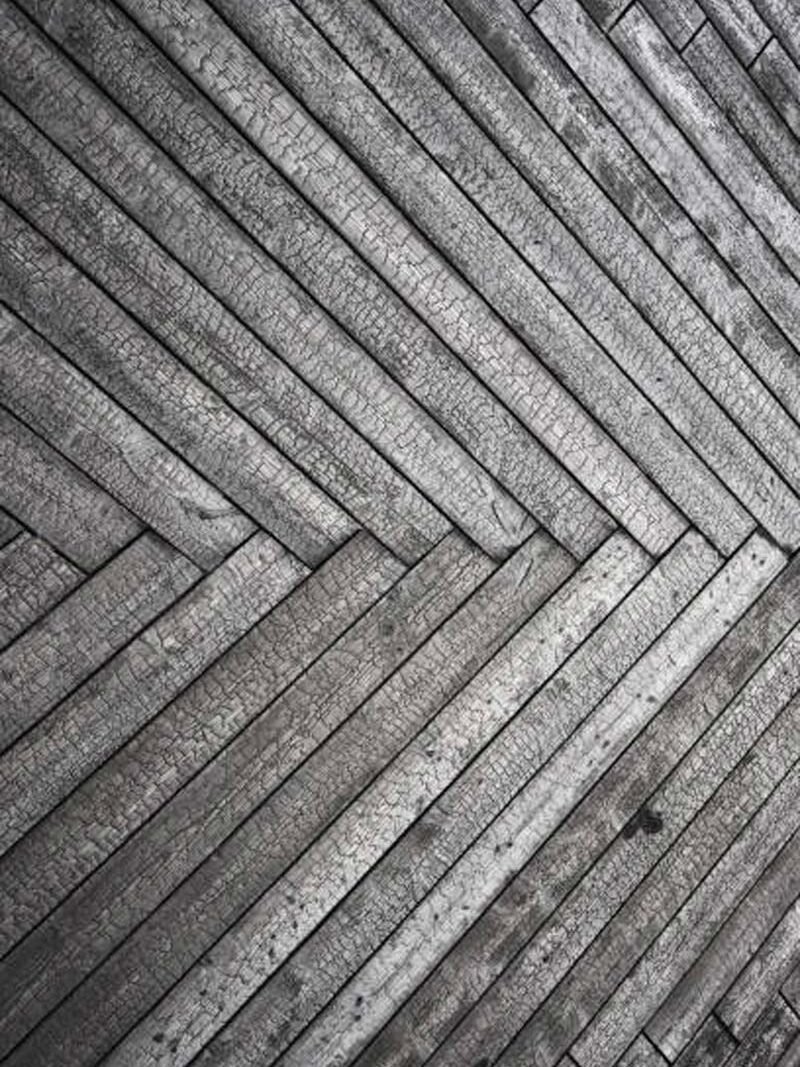
Reference: Shou Sugi Ban
Traditional Japanese charring technique – the depth and texture I want to achieve through alternative, non-toxic means.
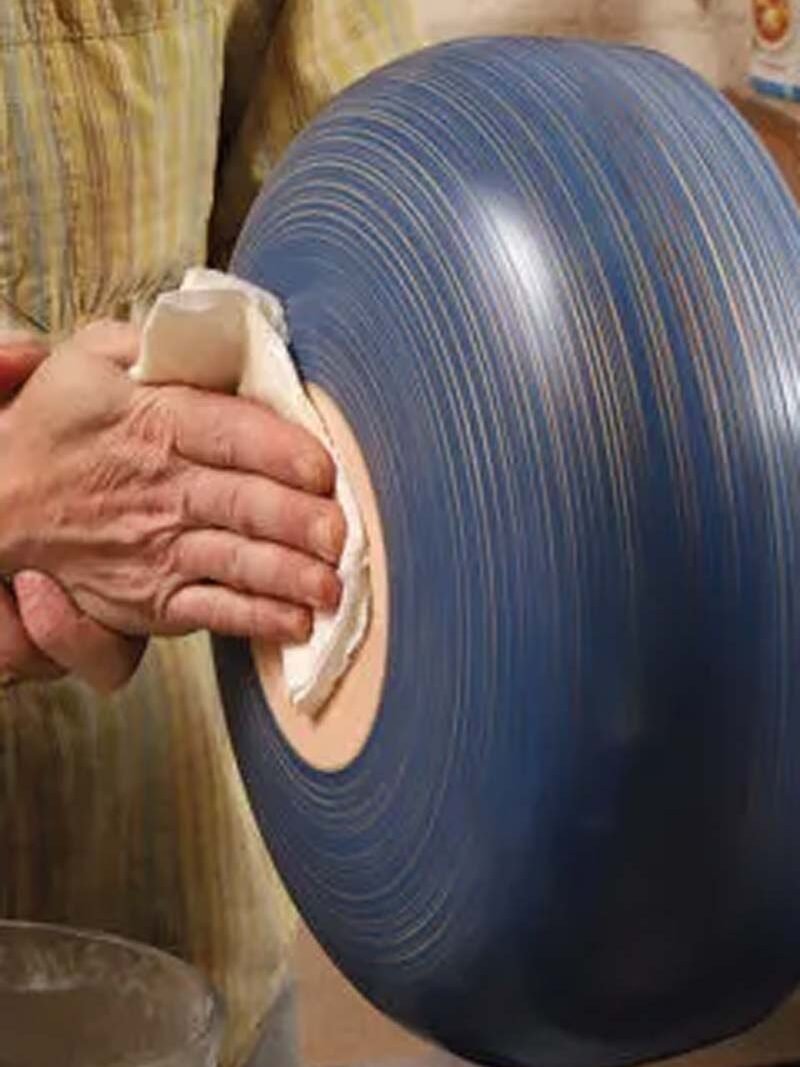
Reference: Milk Paint
A traditional finish I admire for its chalky, matte surface quality – but one that relies on animal-derived casein (often imported).
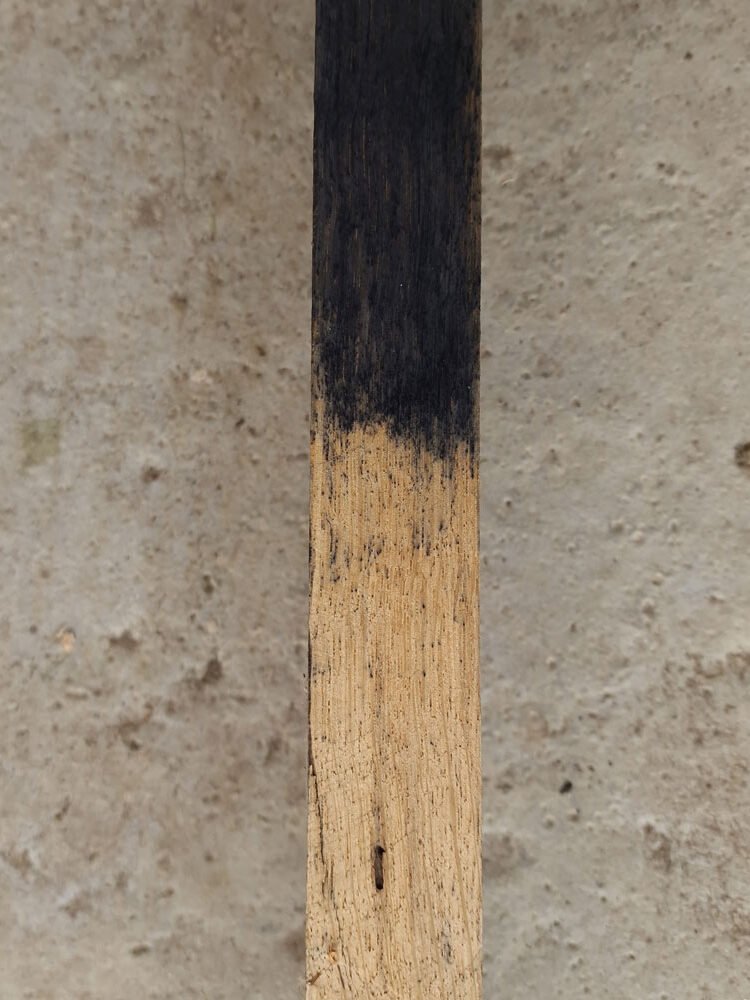
Early Test: Iron Vinegar on Oak
A first experiment replacing synthetic dyes and stains – iron vinegar reacting with the oak’s natural tannins.